Article by:
Military Loop Command

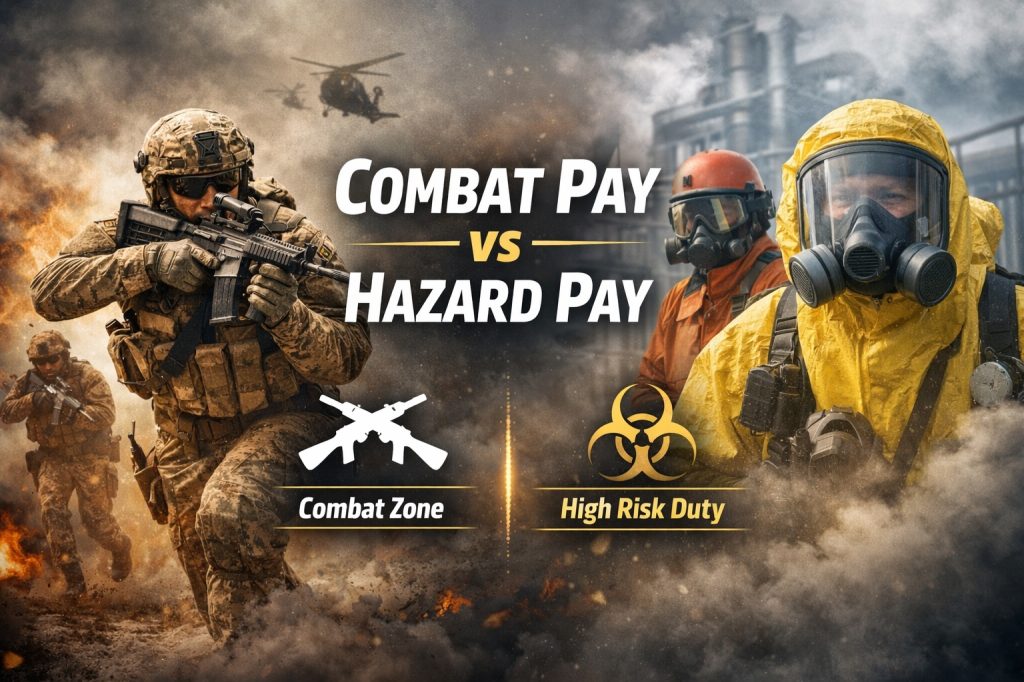
Combat Pay and Hazard Pay sound similar, but they are triggered by different rules. This guide explains what each one is, how they differ, and when you may receive them.
Both combat pay and hazard pay exist to compensate service members for increased risk. However, they are triggered by different conditions and are not interchangeable.
Combat Pay (often referred to as Hostile Fire Pay or Imminent Danger Pay) is paid when you serve in a designated combat zone or hostile fire area.
Eligibility is tied to official designation and presence in the area — not necessarily direct combat activity.
Hazard Pay compensates service members for performing specific dangerous duties, such as flight operations, parachuting, demolition, or diving.
It is duty-based, not location-based, and often requires certification or qualification.
Eligibility for either pay depends on official orders, documentation, and compliance with DoD and service-specific policies.
Both pays appear as separate line items on your LES. If a pay is missing, confirm orders, dates, and qualifications first.